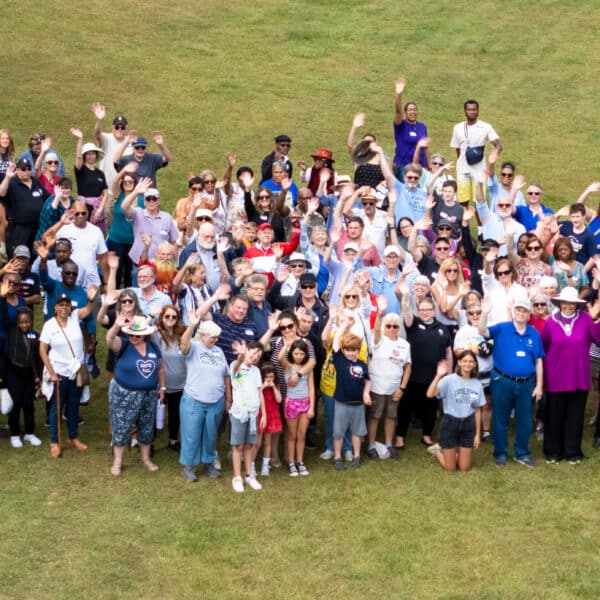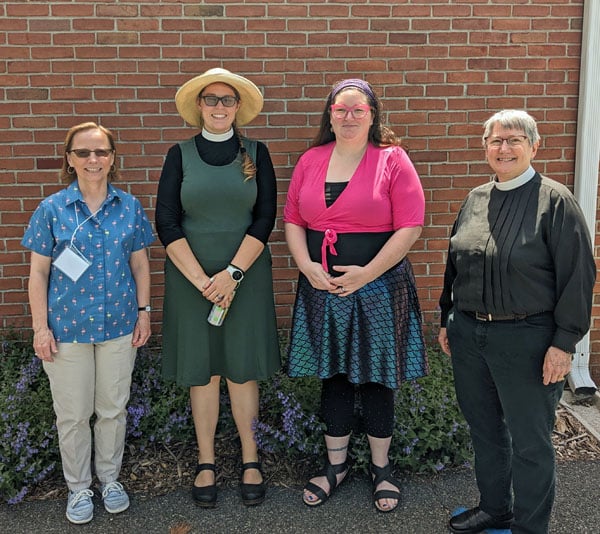
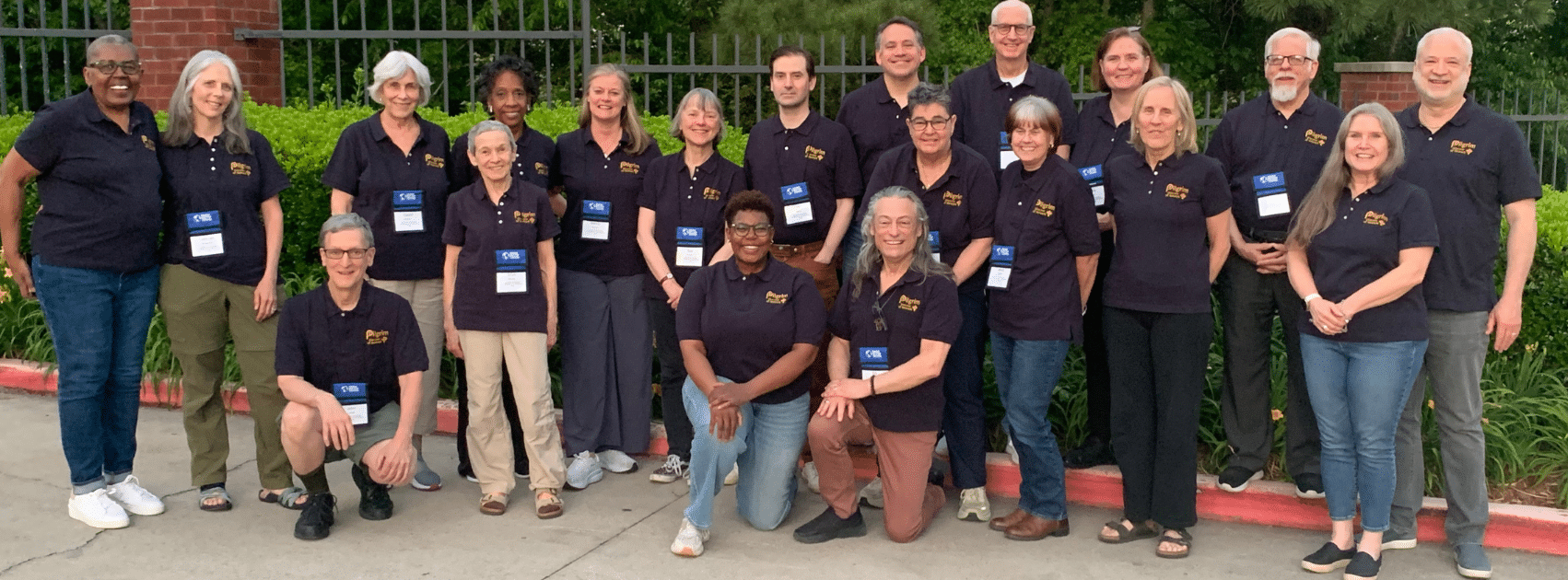
For the second year in a row, a group from the Diocese of Newark has undertaken a powerful pilgrimage through Alabama, retracing the footsteps of history and the brave souls who fought for civil rights. Updates from the Pilgrims will be posted here. View their photo gallery.
Thursday, April 23 – Birmingham
We have gathered in Birmingham, Alabama. Each of us has been preparing for this journey for months, with reading, praying, studying, and building our pilgrimage community for this encounter with history, injustice, repentance and renewal. Easter joy promises new and eternal life in Christ with God. Please keep us in prayer as we learn and discover our own and communal challenges of revealing God’s Beloved Community over the next four days.
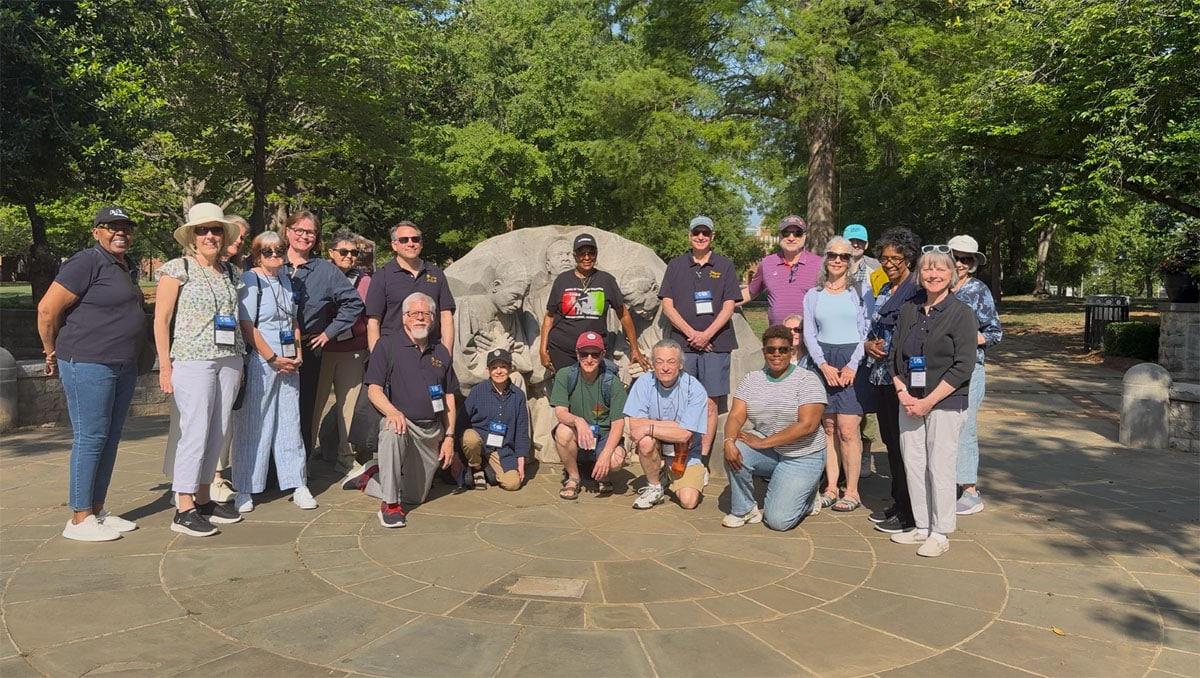
Today, Thursday, we will visit Kelly Ingram Park, the 16th Baptist Church, and the Civil Rights Museum.
Please pray with us this prayer we wrote:
Loving God, grant us freedom to have an open mind to accept and understand what we are about to see and experience, we ask this in Jesus name. AMEN.
Later
Thursday offered us a tour of Birmingham’s Kelly Ingram Park where, in 1963, on the day before Palm Sunday, three pastors knelt and prayed with non-violent protesters who marched against Birmingham’s segregated society. We learned from Paulette, a Foot Soldier, who was 13 when she was part of the Children’s Crusade on May 2, 1963, who were met my police with German shepherd dogs, and the fire department with fire hoses spraying the children. Bull Connor was the Commissioner of Public Safety at the time.
We toured the A.G. Gaston Motel, a Birmingham Civil Rights National Monument. The Rev. Dr. Martin Luther King, Jr. stayed in this motel, one of the few places for Blacks, and listed in the “Green Book.”
After lunch we received a guided tour of the 16th Street Baptist Church, where on Sept 15, 1963, four young girls were killed when white supremacists planted dynamite outside against the church, which exploded at 10:22 a.m. The girls were in the ladies’ lounge getting ready for Youth Sunday service at 10:45 a.m. The lesson that day was Matthew 5:44-45, which instructs Christians to actively love and pray for those who hate or persecute you.
Our final learning and immersion experience of the day was at the expansive Birmingham Civil Rights Museum. We came face to face with deeper truths about segregation and the struggle and fight for equity and justice.
Friday, April 24 – Montgomery
On Friday, April 24, our pilgrimage group departed Birmingham and arrived in Montgomery. We began our day at the Equal Justice Initiative (EJI) Legacy Museum. The museum presents a powerful, multimedia narrative that traces the history beginning with the arrival of Western European colonizers in the “new” world. Their arrival brought disease to Indigenous peoples, led to the claiming of native lands, and the eventual killing of these original inhabitants. The main focus of the Legacy Museum, however, is the African Slave Trade. The exhibits detail the brutal kidnapping of millions of peaceful African people, who were considered less than human and labeled as savage. These individuals, created in the image of God, were reduced to property and subjected to trade and sale. The museum continues to tell the story of oppression through the periods of Emancipation, Reconstruction, Jim Crow, and the more than 4,000 documented lynchings. It also covers the Civil Rights Movement, Bloody Sunday, the fight for Voting Rights, and draws connections to modern-day injustices such as mass incarceration and an unequal justice system. The museum’s immersive images, narratives, and exhibits gave us a deeper appreciation for Montgomery’s role in this history.
Following our time at the museum, we visited the Freedom Monument Sculpture Park, situated between the rail yards and the Alabama River. These sites stand as solemn reminders of the horrors of slavery, and our group approached them with respect and attentiveness.
A significant moment during our visit was hearing from a representative of the Equal Justice Initiative. Their presentation broadened our understanding of EJI’s mission and the ongoing fight to represent and defend those who have been neglected and harmed by an unjust legal system.
Later in the day, we were welcomed by Rev. Lary Yarborough and members of the Church of the Good Shepherd Episcopal Church. This church holds a unique place in history, having provided a spiritual home to several Black families who were turned away from the affluent, white St. John’s Church in downtown Montgomery. The congregation is preparing to welcome a new rector on May 3.
Saturday, April 25 – Montgomery & Hayneville
On Saturday, April 25, we visited the Peace and Justice Memorial created by EJI. At first glance, the memorial appears to be a simple display of steel pillars and sculptures, but it is, in fact, a powerful tribute to more than 4,000 men, women, children, and entire families who were lynched without fair trials or any factual justification. The site’s impact is indescribable and can truly only be experienced in person. This was a morning that profoundly moved our group.
After visiting Montgomery, our pilgrimage continued to Hayneville. There, we toured the jail where Jonathan Myrick Daniels was once held. We also visited the site of his murder and paused to reflect at the memorial honoring him in the center of town.
Sunday, April 26 – Selma
On Sunday, April 26, our final day of the pilgrimage, we traveled to Selma. We were greeted by the Rev. Amy George, who welcomed us with a traditional Southern breakfast. Her sermon, inspired by the theme of the good shepherd, set a thoughtful and inviting tone for the day.
To conclude our pilgrimage, we participated in a guided tour of Selma. Our guide, a civil rights “foot soldier,” shared personal accounts of participating in the protests and described the beginnings of the nonviolent movement for civil rights. The journey ended with a symbolic walk across the Edmund Pettus Bridge, commemorating the enduring legacy of those who fought for justice and marking the conclusion of our pilgrimage.
The pilgrimage was more than just a visit or vacation—it was an opportunity for transformation. The experience was exhausting, informative, and exhilarating. It provided each participant with the chance to reflect, react, and respond to the important question: What is God asking me to do?