Feature Stories
Poetry, Prayer, and Protest: Minneapolis experience shared with Christ Church, Short Hills
On Tuesday, March 9, members and guests of Christ Church in Short Hills gathered on Zoom to hear firsthand accounts of how local clergy and community members in Minneapolis have responded to recent Immigration and Customs Enforcement (ICE) operations that have traumatized families, shaken neighborhoods, and disrupted the local economy.
The presentation featured the Rev. Len Freeman, who served as rector of Christ Church from 1991 to 1998, and his wife, the Rev. Lindsay Hardin Freeman, also an Episcopal priest. Now living in Minnesota, the Freemans worship at Lindsay’s childhood church, St. David’s, Minnetonka, located about 15 miles outside Minneapolis.
Through poetry, photographs, and personal stories, the couple described how Minneapolis residents have responded to what has felt like an invasion with acts of solidarity, pastoral care, and courage.
The conversation was hosted by the Rev. Bowie Snodgrass, rector of Christ Church in Short Hills. She had seen Len’s poems and Lindsay’s photos and posts on Facebook and invited them to share their experiences with the congregation and diocese. “As a fellow priest and poet, the Freeman’s faith perspective and creative responses were deeply meaningful to me alongside the national news coverage this winter.” Rev. Snodgrass opened the evening with a prayer and shared one of her poems before Fr. Freeman closed the session in prayer.
The evening’s theme, “Poems, Prayers, and Presence,” reflected the ways art, faith, and community have emerged alongside protest and activism. The group discussed several of Len Freeman’s poems, including Minneapolis 34th and Portland, written following the killing of Renée Good; When Facing Dragons, describing the frustration of citizens who want to do more to help but aren’t readily able; and Breaking Bread for Jesus, about acts of pastoral care in feeding families in hiding.
Personal Stories from the Community
Among the stories shared was that of the Black Forest Inn, a historic German restaurant on “Eat Street,” a stretch of road known for its diverse dining, located directly across the street from where Alex Pretti was shot and killed by federal agents on January 24th. In the days that followed, the restaurant became an informal refuge for neighbors gathering at a nearby memorial to lay flowers, light candles, and leave notes. Yet Len described hearing that the restaurant’s owner, Gina Christ, had herself been inexplicably detained and taken to the Whipple Federal Building before later being released.
Violent events have touched the Freemans’ own family. The day after Renée Good was shot, one of their children joined many others at the Whipple Federal Building to protest… and was met with tear gas. His fiancée was struck by a rubber bullet. “It’s just the craziest, craziest thing,” Lindsay said, describing the feeling that your own hometown has become a war zone.
Economic and Social Impact
The Freemans described broad disruptions across Minneapolis. Restaurants and businesses temporarily closed as employees were detained or too afraid to leave home. Construction projects halted overnight. Agricultural industries across the state, including soybean farming and turkey production (Minnesota is the largest turkey producer in the US) have faced serious labor shortages tied to ICE enforcement.
Quiet Acts of Solidarity
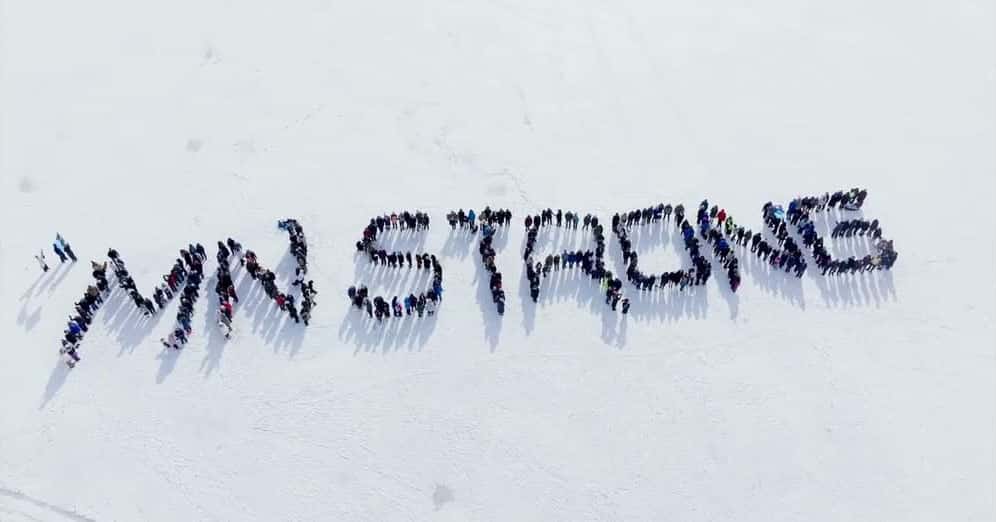
Despite the fear, the presentation highlighted many examples of community resilience. Neighbors organized informal networks to deliver groceries to families reluctant to leave their homes. Churches expanded food distribution and offered spaces for pastoral care and mutual aid. Hundreds gathered at a large community event simply to be present for one another, spelling out “MN Strong” in a powerful show of unity.
Minneapolis as a “Stalking Horse”
Len Freeman suggested that Minneapolis may have been selected as an early test of how aggressive enforcement tactics would be received in the nation. The group discussed the hope that the courage shown by its residents, in the streets, in their churches, and around their neighbors’ tables, may have served to protect other communities by demonstrating that such tactics would meet with organized, compassionate resistance.