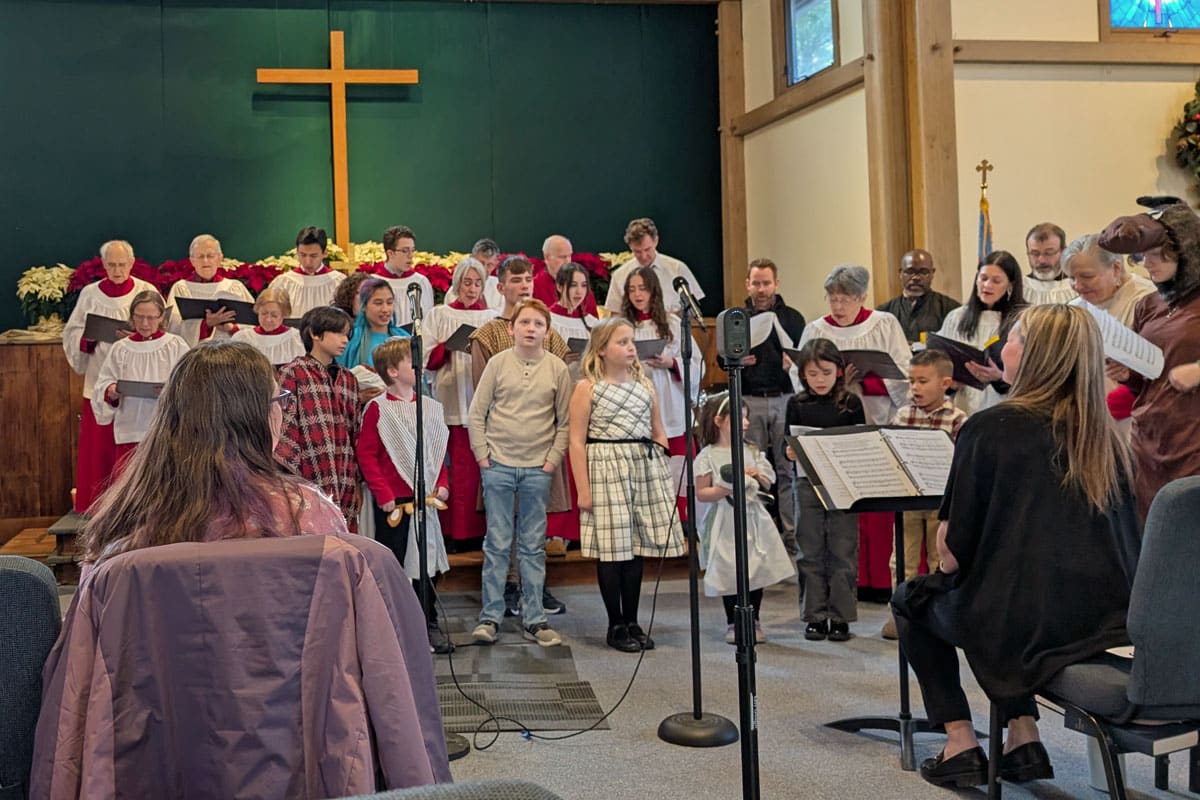
As we have written previously, Church of the Messiah in Chester and St. Mary’s in Sparta have been working together for the last two plus years in a collaborative ministry model. Members of Messiah and St. Mary’s wrote a series of articles for The Voice Online, published in the fall of 2025, about our collaborative ministry and what this arrangement has been like. Early in 2026 we started a Reflection Process with the goal of listening to the members of both parishes to see whether this collaborative ministry would continue beyond its originally agreed timeframe (ending in January of 2027). We are happy to announce that Church of the Messiah and St. Mary’s will be continuing our collaboration for three more years (ending in January of 2030). We are also happy that the Rev. Elizabeth Ivell will be continuing her work as Priest-in-Charge for the extended timeframe. We are sad, but joyful to see the Rev. Deacon Gail Kertland retire after more than twenty years of diaconal service.
While the end goal of the Reflection Process was to determine the viability of continuing the collaborative ministry, we learned so much more as well! One of the most consistent feedback pieces is that not enough communication has been done about the organizational structure and function. While the agreements between the two churches have been publicly available for our members to read, not many people are spending time doing so. In order to help our members feel more comfortable with the ins and outs of our collaborative ministry agreements, our leadership is looking at a series of short videos to share the details and highlights of our agreement.
Another aspect that the Reflection Process brought to light was a need for more education and formation in the Episcopal Church. While our collaborative ministry team consisted of a Priest and a Deacon, many in our churches have been confused about the ministry of a deacon and the ways that deacons function in different liturgies. This has been a good reminder that many in our churches come from other types of backgrounds. We heard that while history and tradition are important, so are finding new ways to offer the Episcopal gifts to people in our wider communities.
A third issue the Reflection Process brought up was the distance in miles between the two churches. Zoom has made many things possible, but the distance between Chester and Sparta continues to cause frustration and hinders some from being a part of joint initiatives. We are looking into ways to do more events in between our two churches.
All in all, we have learned that a church can really NEVER communicate too much. Being in any kind of relationship requires constant and consistent communication through multiple channels. Our ability to do collaborative ministry is based on our ongoing communication about what we are doing, where we are doing it, and how we are doing it. Communication is key.
Our work is enhanced by Mother Elizabeth’s doctoral studies with Drew Theological School, since her research area is clergy in multipoint congregational settings. After two years in the program, she will be giving a presentation on the history and theology of clergy leadership in multipoint congregational settings at Church of the Saviour in Denville on Sunday, July 26, 2026 at 3 PM. All are welcome to come and learn more about the history of clergy serving in this kind of collaborative ministry model.
We thank everyone in our diocesan family who have helped support and encourage us in trying this experiment. We are still learning and growing, and we hope we will have more to share in the years to come!