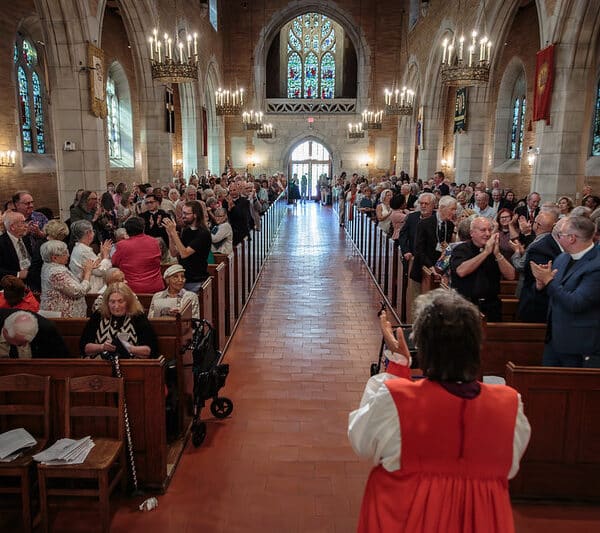
On a weekend when our nation was honoring the Rev. Dr. Martin Luther King, Jr., I joined clergy across the country in preaching about the faith of this prophet and the lessons we continue to learn from his life. In this moment in our nation – when people are being beaten, killed, deported without due process, or arrested because of their race, accent, or place of work – his prophetic witness speaks to us with renewed urgency.
That very Sunday, with King’s words still ringing in our ears, a call went out from clergy in Minneapolis to clergy across the nation. Echoing King’s call to Selma, they asked us to come to Minneapolis to stand, march, and pray with them on January 23rd for what was being called A Day of Truth & Freedom. Like many others, I knew in my heart that I had to answer that call.
Yes, we were being asked to enter a dangerous situation. Yes, it would be winter in Minnesota, with temperatures predicted to be 30 below. Yes, we are exhausted, having shown up again and again for vigils, marches, and protests. And yet, as King’s words resounded from our pulpits, I was reminded of what he said in his final Sunday sermon at our own Washington National Cathedral: that the nation does not move toward genuine equality until it is confronted through direct action, and that there comes a time when one must take a position that is neither safe, nor politic, nor popular, but must do it because conscience demands it.
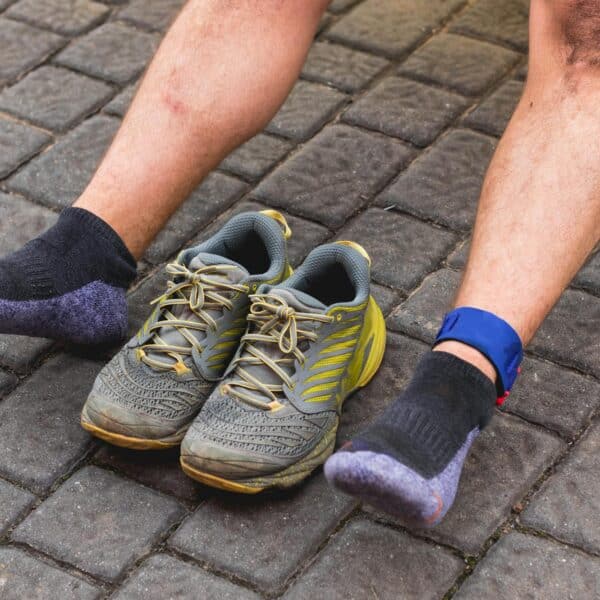
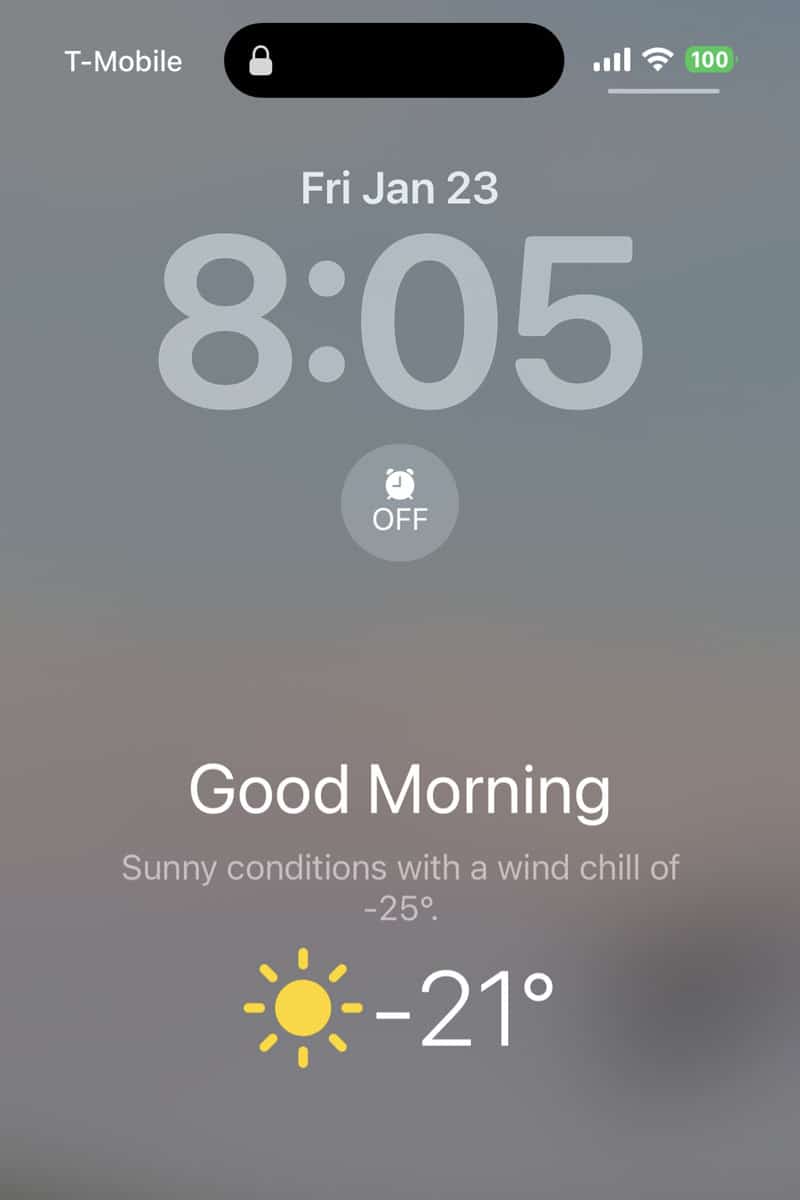 So on Thursday night, January 22nd, I found myself in Minneapolis during an extreme cold warning. The morning of the march, I woke to a temperature of 21 below and layered myself accordingly. I headed to Gethsemane Episcopal Church, a closed parish of the Diocese of Minnesota just a few blocks from The Commons, where the march was to begin. The streets were empty, the shops and schools closed – all part of this act of resistance.
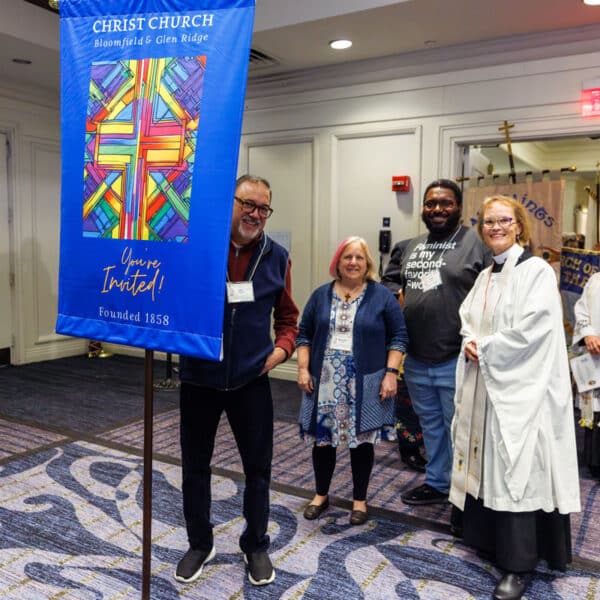
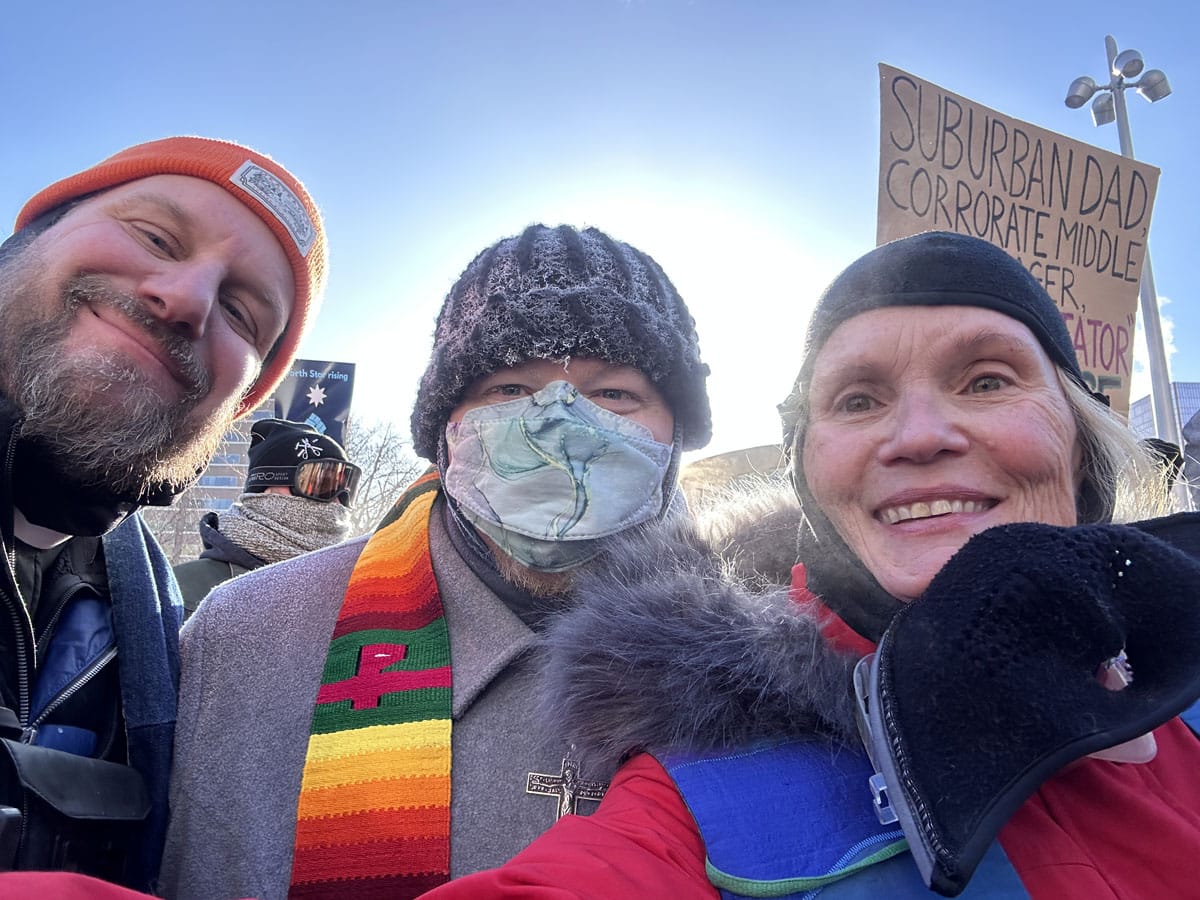
When I arrived, clergy and laity were already gathered in prayer before joining the thousands who had come to stand against the brutality, cruelty, and lawlessness of the federal occupation of this once-peaceful city. Among us were the Rt. Rev. Craig Loya of Minnesota, the Rt. Rev. Marianne Budde of Washington, D.C., and the Rt. Rev. Betsey Monnot of Iowa. While there, I received a text warning that federal agents might use water cannons on protesters. I put my phone away, donned my tear-gas mask, and bundled myself in as much warmth as possible.
Singing “This Little Light of Mine,” we left the church and merged with thousands entering from every direction. The crowd was so massive that it took nearly an hour for those of us marching together to fully enter the procession. We moved slowly, navigating ice-covered streets before surging forward.
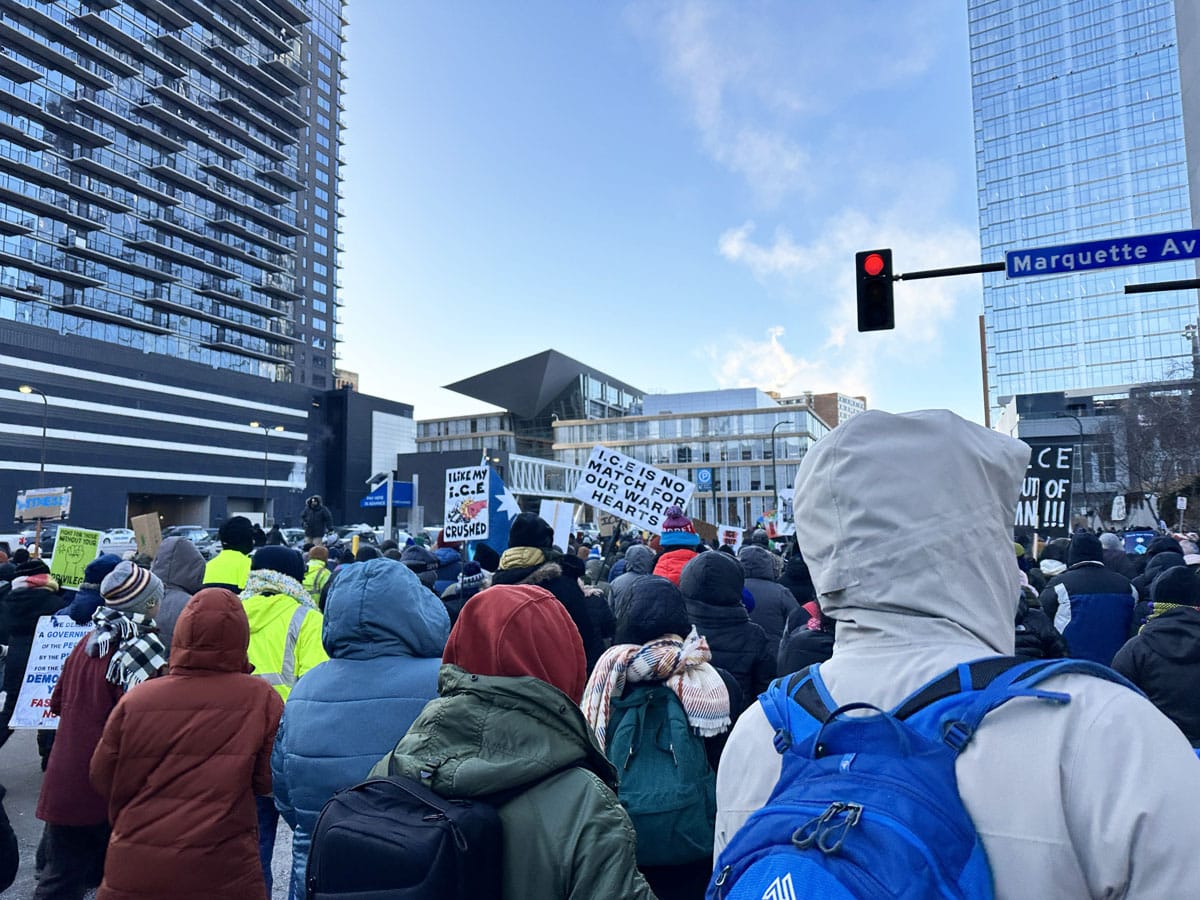
The cold was intense – so intense that taking a photo or video for even a few seconds brought sharp pain to my exposed hand. Still, the cold did nothing to dampen the fervor of the protesters or quiet our voices. We called for ICE to leave Minnesota. We spoke aloud the name of Renee Good, killed by an ICE agent. We named Liam Ramos, a five-year-old child used as bait by ICE to lure out his family before being sent with his father to a prison in Texas. We demanded justice, accountability, and an end to the occupation.
It is impossible to describe the joy I felt seeing so many people there – 50,000, we were told. For most, this was not a single day of action. They were living this resistance daily: patrolling neighborhoods to warn of federal agents, distributing food to those unable to leave their homes, and caring for one another. Clergy tended their people, preaching the gospel in both word and deed. I was surrounded by prophets – exhausted, unwavering, and deeply inspiring.
When I could no longer feel my feet with a quarter mile left to go, their courage carried me forward. People passed out hand warmers and tissues. Two marchers ahead of me wore backpacks reading, “If you are hungry, tap my shoulder,” and “If you need hand warmers, tap my shoulder.” Even in anger and pain, Minnesotans chose compassion, grace, and love.
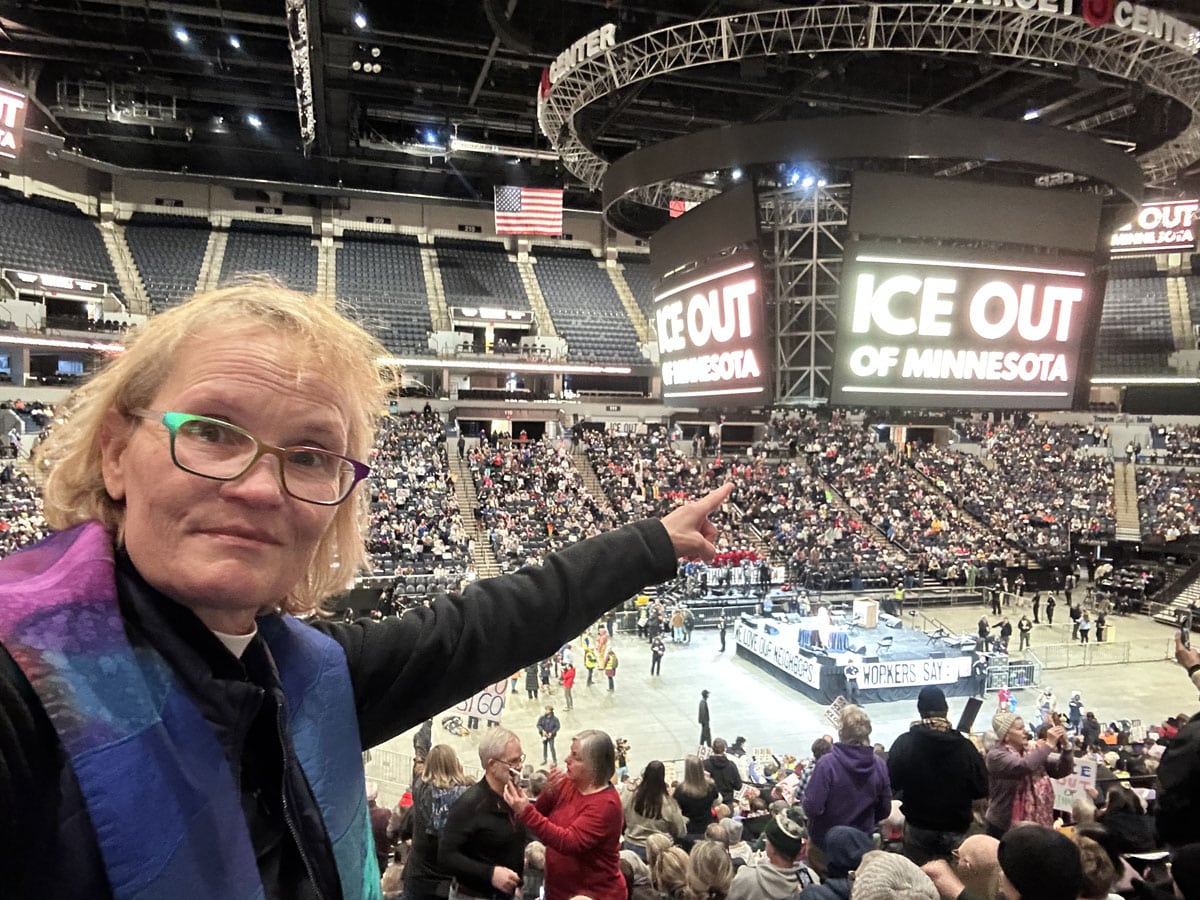 Because of the extreme cold, the rally location was moved to the Target Center. Inside, we were greeted with that famous “Minnesota nice.” A jazz band played from above the escalators while a protester in an inflatable frog costume danced. Once inside the arena, we stomped our frozen feet to Gloria Gaynor’s “I Will Survive” as we waited for the speakers – and they were worth the wait.
Faith leaders proclaimed that God’s love is greater than any hate this government can unleash. Indigenous leaders reminded us that no one is illegal on stolen land. Organizers noted the irony of gathering in a building named for a corporation that had capitulated to this administration, reminding us that it was Minnesotans’ tax dollars that built it. “This is our house,” they declared – and the crowd roared in agreement.
Walking back to my hotel through deserted streets, I passed the statue of Mary Tyler Moore tossing her hat into the air in an iconic moment of liberation. The theme song’s title came to mind: Love Is All Around. It was that day. And I left believing, as the song says, that we’re “gonna make it after all.”
I flew out the next morning, later learning that as I traveled above the city, another person below was beaten and killed by Federal immigration agents. Does that mean it was all for nothing? Not at all. It means the struggle continues, and those of us who are able must keep answering the call of Christ – even to the cross. For love will always defeat hate, light will overcome darkness, and life is stronger than death.
As Dr. King said in that same sermon, even in the deepest darkness we can still sing, “We Shall Overcome,” because truth cannot be crushed forever, and the arc of the moral universe, though long, bends toward justice. With this faith, we will transform despair into hope and discord into harmony. And one day, the people of God will shout for joy.